Showing posts with label Kate Frey. Show all posts

Wednesday, April 12, 2023

April is National Gardening Month!

For every gardener who cares about the planet, this guide to designing a bee garden helps you create a stunningly colorful, vibrant, healthy habitat that attracts both honeybees and native bees. In The Bee-Friendly Garden, award-winning garden designer Kate Frey and bee expert Gretchen LeBuhn provide everything you need to know to create a dazzling garden that helps both the threatened honeybee and our own native bees. No matter how small or large your space, and regardless of whether you live in the city, suburbs, or country, just a few simple changes to your garden can fight the effects of colony collapse disorder and the worldwide decline in bee population that threatens our global food chain. There are many personal benefits of having a bee garden as well! Bee gardens:

  • · contain a gorgeous variety of flowers
  • · bloom continuously throughout the seasons
  • · are organic, pesticide-free, and ecologically sustainable
  • · develop healthy and fertile soil
  • · attract birds, butterflies, and other beneficial insects
  • · increase the quantity of your fruit and vegetable harvest
  • · improve the quality, flavor, and size of your produce

Illustrated with spectacular full-color photos, The Bee-Friendly Garden debunks myths about bees, explains seasonal flower progression, and provides detailed instructions for nest boxes and water features. From “super blooming” flowers to regional plant lists and plants to avoid, The Bee-Friendly Garden is an essential tool for every gardener who cares about the planet and wants to make their yard a welcoming habitat for nature’s most productive pollinator. (from Amazon.com)

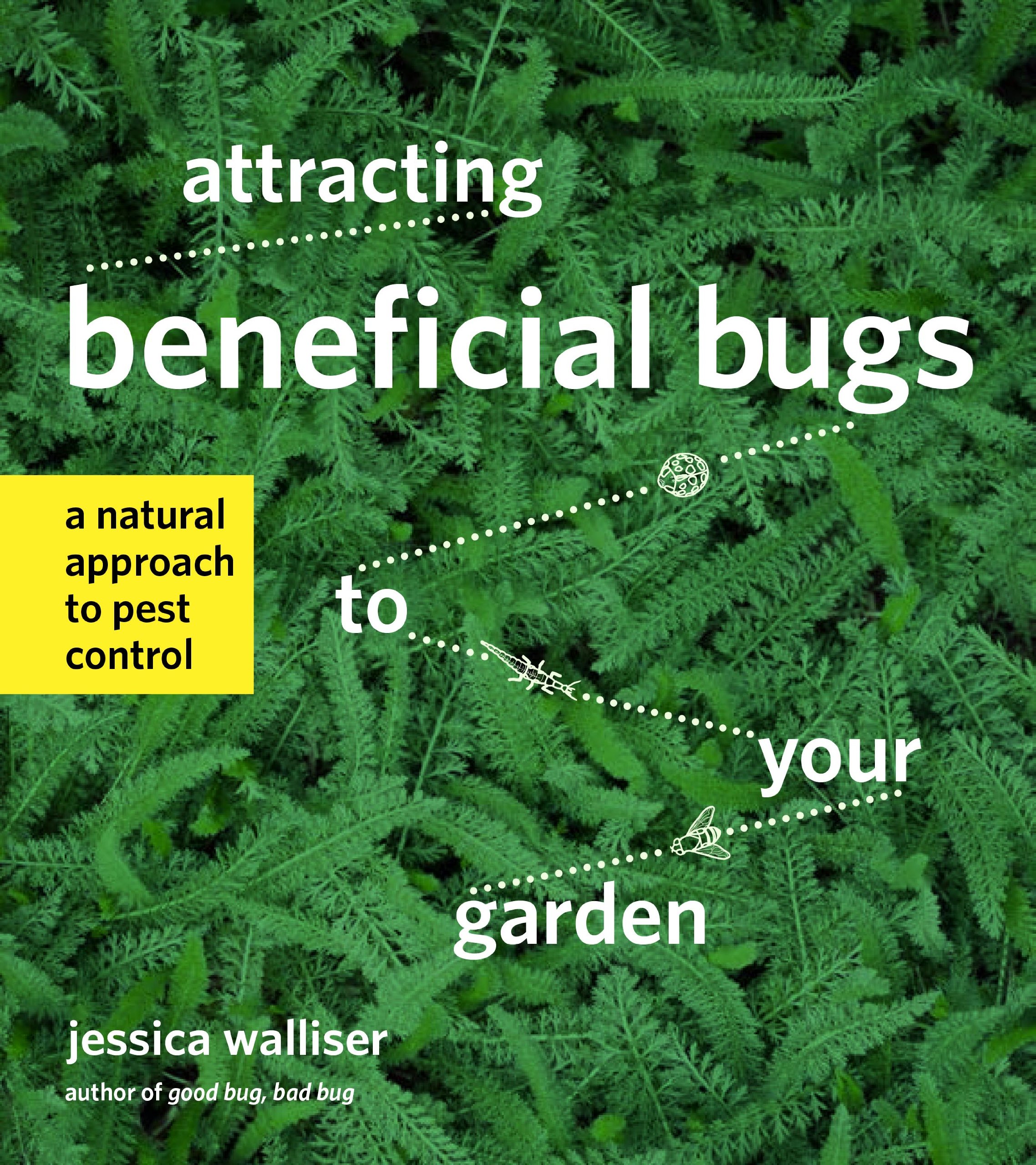
“Jessica Walliser lets readers in on the secrets to a garden that buzzes with activity. Her profiles, on the insects that fight pests and the best plants for attracting them, offer clear, practical tips.” —Martha Stewart Living. A healthy population of beneficial insects can eliminate the need for dangerous pesticides. Say goodbye to common pests like spider mites, aphids, and leafhoppers just by planting a beautiful garden full of the right flowers and herbs! At first it might seem counter intuitive to want bugs in your landscape, but insects are good for your garden—especially the helpful ones that eat the pests feeding on your favorite plants.  Say goodbye to common pests like spider mites, aphids, and leafhoppers just by planting a beautiful garden full of the right flowers and herbs! In Attracting Beneficial Bugs, organic gardening expert Jessica Walliser provides an accessible guide to selecting, placing, and caring for plants that will invite beneficial insects into your garden to do the dirty work of pest control for you. You’ll learn which plants lure in pest-eating predators and how to design a beautiful garden that provides for these beneficial bugs throughout the year. (from Amazon.com)

Nothing tastes better than herbs harvested fresh from the garden! Grow Your Own Herbs shares everything you need to know to grow the forty most important culinary herbs. You’ll learn basic gardening information, including details on soil, watering, and potting. Profiles of 40 herbs—including popular varieties like basil, bay laurel, lemon verbena, tarragon, savory, thyme, and more—feature tasting notes, cultivation information, and harvesting tips. Additional information includes instructions for preserving and storing, along with techniques for making delicious pastes, syrups, vinegar, and butters. If you are new to gardening, have a limited space, or are looking to add fresh herbs to their daily meals, Grow Your Own Herbs by Susan Belsinger is a must-have. (from Amazon.com)

Companion planting has a long history of use by gardeners, but the explanation of why it works has been filled with folklore and conjecture. Plant Partners by Jessica Walliser delivers a research-based rationale for this ever-popular growing technique, offering dozens of ways you can use scientifically tested plant partnerships to benefit your whole garden. Through an enhanced understanding of how plants interact with and influence each other, this guide suggests specific plant combinations that improve soil health and weed control, decrease pest damage, and increase biodiversity, resulting in real and measurable impacts in the garden. Intentionally growing certain plants together to benefit the whole garden now has science to explain its success. Jessica Walliser’s new vision of an old tradition is built around a modern understanding of the marvelous web of connections happening in the garden and how to use them to create real and measurable results. Discover dozens of well-studied partnerships that offer fresh strategies to:

  • - Break up heavy soils
  • - Combat weeds and disease
  • - Lure pests away
  • - Attract specific beneficial insects
  • - Improve pollination

Raised bed gardening is the fastest-growing garden strategy today, and Raised Bed Revolution by Tara Nolan is the definitive guidebook to mastering this consistently proven and effective gardening method. Raised Bed Revolution provides you with information on size requirements for constructing raised beds, height suggestions, types of materials you can use, and creative tips for fitting the maximum garden capacity into small spaces—including vertical gardening. Enhanced with gorgeous photography, this book covers subjects such as growing-medium options, rooftop gardening, cost-effective gardening solutions, planting tips, watering strategies (automatic water drip systems and hand watering), and more. The process of creating and building raised beds is a cinch, too, thanks to the extensive gallery of design ideas and step-by-step projects. This gardening strategy is taking serious root. Why? Several reasons:

  • Raised beds allow gardeners to practice space efficiency as well as accessibility (the beds can be customized to be any height).
  • Raised beds permit gardeners to use their own soil, and they can be designed with wheels for easy portability if partial sunlight is a problem.
  • Water conservation is easier for gardeners who use raised beds.
  • Pest control is assisted because most garden pests can’t make the leap up into the raised bed. For yards that struggle with drainage, raised bed gardening offers a no-brainer solution. Raised beds simply create a more interesting yard!

Find out more about why everyone is joining the raised bed revolution, roll up your sleeves and join in! (from Amazon.com)

Wednesday, January 18, 2023

Keeping Bees and Chickens...And a Bit of Gardening

"One woman's charming and personal account of abandoning the rat race to live blissfully as a beekeeper and honey entrepreneur—plus everything you'd ever want to know about bees. Ten years ago, Marina Marchese fell in love with bees during a tour of a neighbor's honeybee hives. Surprised to find that allowing docile honeybees to crawl across her hands instilled a serene tranquility and comfort, Marina quit her job, acquired her own bees, built her own hives, harvested honey, earned a certificate in apitherapy, studied wine tasting in order to transfer those skills to honey tasting, and eventually opened her own business. Today, Red Bee Honey sells artisanal honey and honey-related products to shops and restaurants all over the country. Honeybee: Lessons From an Accidental Beekeeper is not only a warm and inspiring story of one woman's intimate experience with honeybees (arguably the most industrious creatures on earth) but it is also bursting with fascinating and practical information about all aspects of bees, beekeeping, and honey, including life inside the beehive and the role of the queen, drones, and workers; how bees make honey; pollination and its importance in sustaining life; building a beehive; hiving and keeping honeybees; harvesting honey and comb; healing with honey and the practice of apitherapy; and much, much more. Recipes for food, drink, and personal care products are included throughout. Also included is a detailed appendix of 75 different varieties of honey." (from Amazon.com)

"Keeping Bees and Making Honey by Alison Benjamin is a stunning, comprehensive and attractive lifestyle guide to beekeeping packed with images, information, practical advice, useful resources and recipes. Whether you have a tiny balcony or acres of land; live in the middle of a city or in the countryside surrounded by flowers, you can keep bees. Keeping Bees and Making Honey caters for every situation, and covers everything you will need to consider before you set up your colony – including when and how to tell the neighbours! 'Understanding your bees' introduces you to the history of bees and humans, the anatomy of a honey bee, the variety of species that you are likely to encounter, the caste system within a colony of queen, worker and drone, and the birth and life cycle of bees. 'What to consider' suggests factors to consider before keeping bees, from the space where you will house your hives to children and pets. Learn about the variety of hives available and how they work, as well all the important things that you will need including protective clothing, a smoker and hive tool, as well as honey-harvesting equipment. There are a variety of sources for purchasing your bees and 'Where and when to get your bees' will give you all the advice you need covering the nucleus, packaged bees, full colonies and tips on marking the queen. There are detailed sections on pollen and supers. 'Gardening for bees' will help you consider the best flowers to supply nectar and pollen to your bees whilst ensuring your garden looks great! It is probably the prospect of home-grown honey that entices most people to keep bees. 'All about honey' will show you how bees make honey, and how to harvest, jar and sell your honey. There is a whole chapter devoted to other bee products, from uses of beeswax; candles and cosmetics, to delicious recipes made with honey. Finally, 'Health and care' will ensure that your apiary stays clean and tidy, and your colony is pest free, strong and vigorous." (from Amazon.com)

"Raising chickens is a growing trend hitting urban and suburban areas, as well as the country. The Complete Idiot's Guide(r) to Raising Chickens by Jerome D. Belanger covers every aspect of raising chickens, whether one lives in the country, suburb, or city. People wanting their own supply of organic, additive-free, free-range eggs want to know how to keep their chickens healthy and egg producing." (from Amazon.com)

  • How to choose what to start with-chicks, pullets, or hens
  • How best to feed and water
  • Coverage of the most popular breeds
  • Everything about eggs, including how to sell them"
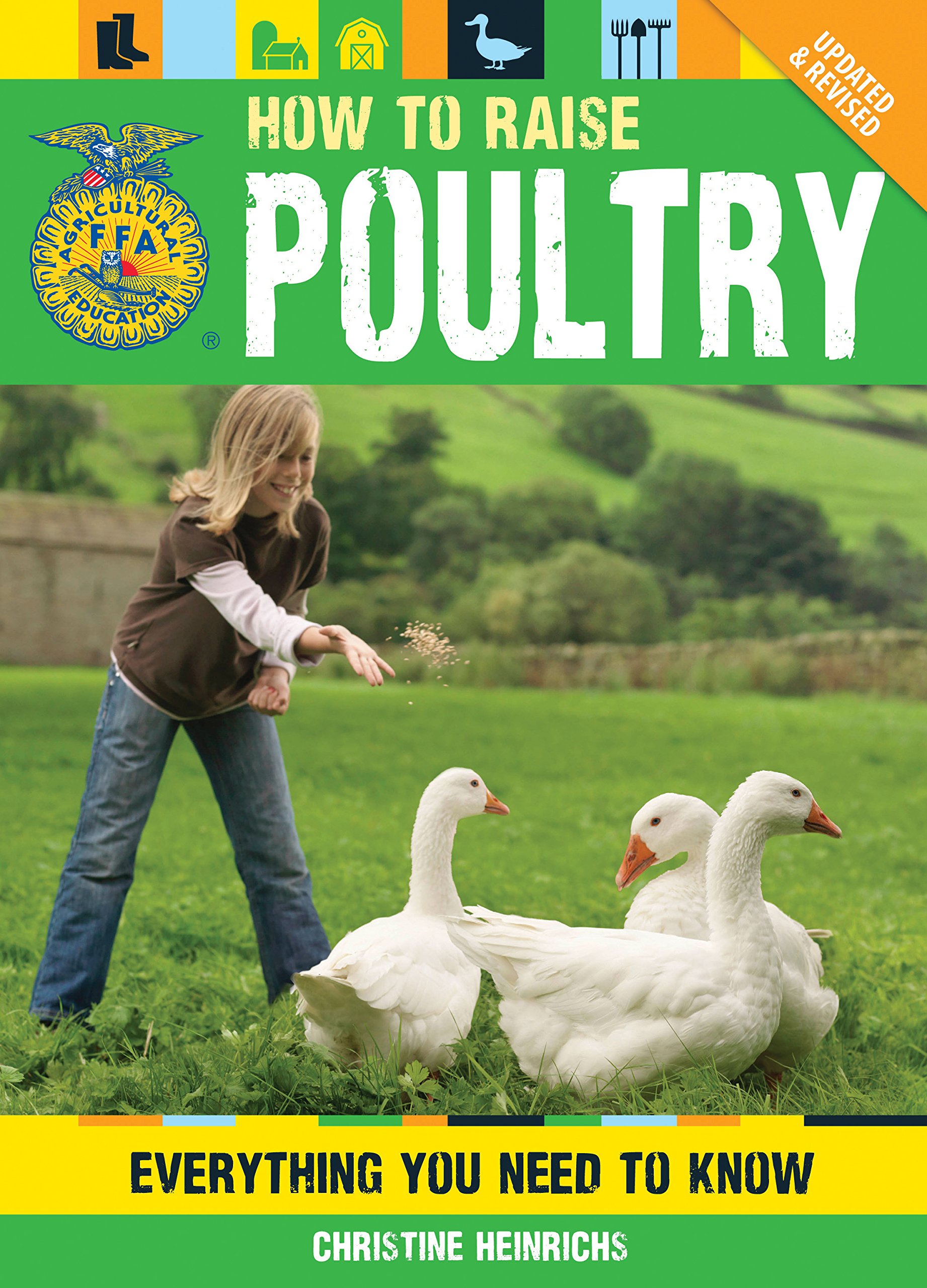
"Christine Heinrichs, author of the critically acclaimed How to Raise Chickens, teaches you how to care for every type of feathered friend. Backed by the National FFA Organization, our acclaimed series of How to Raise guides has helped countless first-time animal owners across the United States confidently care for their new companions. In this freshly updated second edition of How to Raise Poultry: Everything You Need to Know, fowl expert Christine Heinrichs offers her seasoned advice in raising 14 different poultry species: chickens, ducks, emus, geese, swans, turkeys, guinea fowl, peacocks, pheasants, quail, partridge, pigeons, ostriches, and rheas. From feeding and housing to husbandry and health, from showing and marketing to legal concerns, Heinrichs clearly details the differing requirements of each kind of poultry. With her comprehensive approach, fully illustrated with instructional photography, you’ll be well-equipped to select breeds, keep your birds healthy, harvest and sell products, and hatch new generations—whether you want eggs, meat, feathers, hides, or simple companionship." (from Amazon.com)

"For every gardener who cares about the planet, this guide to designing a bee garden helps you create a stunningly colorful, vibrant, healthy habitat that attracts both honeybees and native bees. In The Bee-Friendly Garden, award-winning garden designer Kate Frey and bee expert Gretchen LeBuhn provide everything you need to know to create a dazzling garden that helps both the threatened honeybee and our own native bees. No matter how small or large your space, and regardless of whether you live in the city, suburbs, or country, just a few simple changes to your garden can fight the effects of colony collapse disorder and the worldwide decline in bee population that threatens our global food chain. There are many personal benefits of having a bee garden as well! Bee gardens
  • contain a gorgeous variety of flowers
  • bloom continuously throughout the seasons
  • are organic, pesticide-free, and ecologically sustainable
  • develop healthy and fertile soil
  • attract birds, butterflies, and other beneficial insects
  • increase the quantity of your fruit and vegetable harvest
  • improve the quality, flavor, and size of your produce" (from Amazon.com)
"Many gardeners fear chickens will peck away at their landscape. But you can keep chickens and have a beautiful garden, too! In this essential handbook, award-winning garden designer Jessi Bloom offers step-by-step instructions for creating a beautiful and functional space while maintaining a happy, healthy flock. Free-Range Chicken Gardens by Jessi Bloom covers everything a gardener needs to know, from the basics of chicken keeping and creating the perfect chicken-friendly garden design to building innovative coops." (from Amazon.com)

Wednesday, June 29, 2016

All About Animals

     This week's selection includes three very different non-fiction books. One is a memoir of a young woman who seeks to train the vicious goshawk as a way to cope with her father's death and to pay tribute to him at the same time. The second book is for those who would like to know how to quell your dogs behavior problems. The third book--while technically not about an animal--is a gardening book for those who would like to attract bees and other pollinators to their gardens.

     H is for Hawk is by Helen Macdonald. When her father died suddenly on a London street, Helen was inconsolable. In her grief, she decided to train one of the most aggressive members of the falcon family, the goshawk. As an experienced falconer, Helen knew their fierce and feral nature and was determined to adopt and train Mabel as a means to coping with her grief. She turned to author T.H. White's book The Goshawk for advice and inspiration. This achingly beautiful account of bereavement and the magnetic pull of such an extraordinary creature, H is for Hawk also offers a parallel examination of a legendary writer's eccentric falconry.


     The Dog Behavior Problem Solver by Teoti Anderson, CPDT-KA, KPA-CTP, offer step-by-step positive training techniques to help dog owners correct more than twenty problem behaviors. Dog owners will get professional advice to help you understand your dog and why he behaves the way he does. You'll learn techniques for positive, reward-based methods, like clicker training, to teach foundation behaviors as you build the basic bond upon which all dog training is based. The author offers detailed step-by-step solutions for specific problems like aggression, barking, begging, separation anxiety, and shyness. You will also find case studies based on real dogs and how positive training helped them to overcome their behavioral obstacles.


     Finally, we have The Bee-Friendly Garden by Kate Frey and Gretchen LeBuhn. The authors provide everything you will need to create a breathtakingly hued, vibrant, healthy garden that helps both the threatened honeybee and native bees alike. The size of you available space is not an issue. Whether you live in the city, suburbs, or country, just a few simple changes to your garden can help fight the effects of colony collapse disorder and the worldwide decline of the bee population that threatens the global food chain. This is a book for every gardener who wants to change the world by creating a welcoming environment for nature's pollinators.