Showing posts with label gardening. Show all posts

Wednesday, April 12, 2023

April is National Gardening Month!

For every gardener who cares about the planet, this guide to designing a bee garden helps you create a stunningly colorful, vibrant, healthy habitat that attracts both honeybees and native bees. In The Bee-Friendly Garden, award-winning garden designer Kate Frey and bee expert Gretchen LeBuhn provide everything you need to know to create a dazzling garden that helps both the threatened honeybee and our own native bees. No matter how small or large your space, and regardless of whether you live in the city, suburbs, or country, just a few simple changes to your garden can fight the effects of colony collapse disorder and the worldwide decline in bee population that threatens our global food chain. There are many personal benefits of having a bee garden as well! Bee gardens:

  • · contain a gorgeous variety of flowers
  • · bloom continuously throughout the seasons
  • · are organic, pesticide-free, and ecologically sustainable
  • · develop healthy and fertile soil
  • · attract birds, butterflies, and other beneficial insects
  • · increase the quantity of your fruit and vegetable harvest
  • · improve the quality, flavor, and size of your produce

Illustrated with spectacular full-color photos, The Bee-Friendly Garden debunks myths about bees, explains seasonal flower progression, and provides detailed instructions for nest boxes and water features. From “super blooming” flowers to regional plant lists and plants to avoid, The Bee-Friendly Garden is an essential tool for every gardener who cares about the planet and wants to make their yard a welcoming habitat for nature’s most productive pollinator. (from Amazon.com)

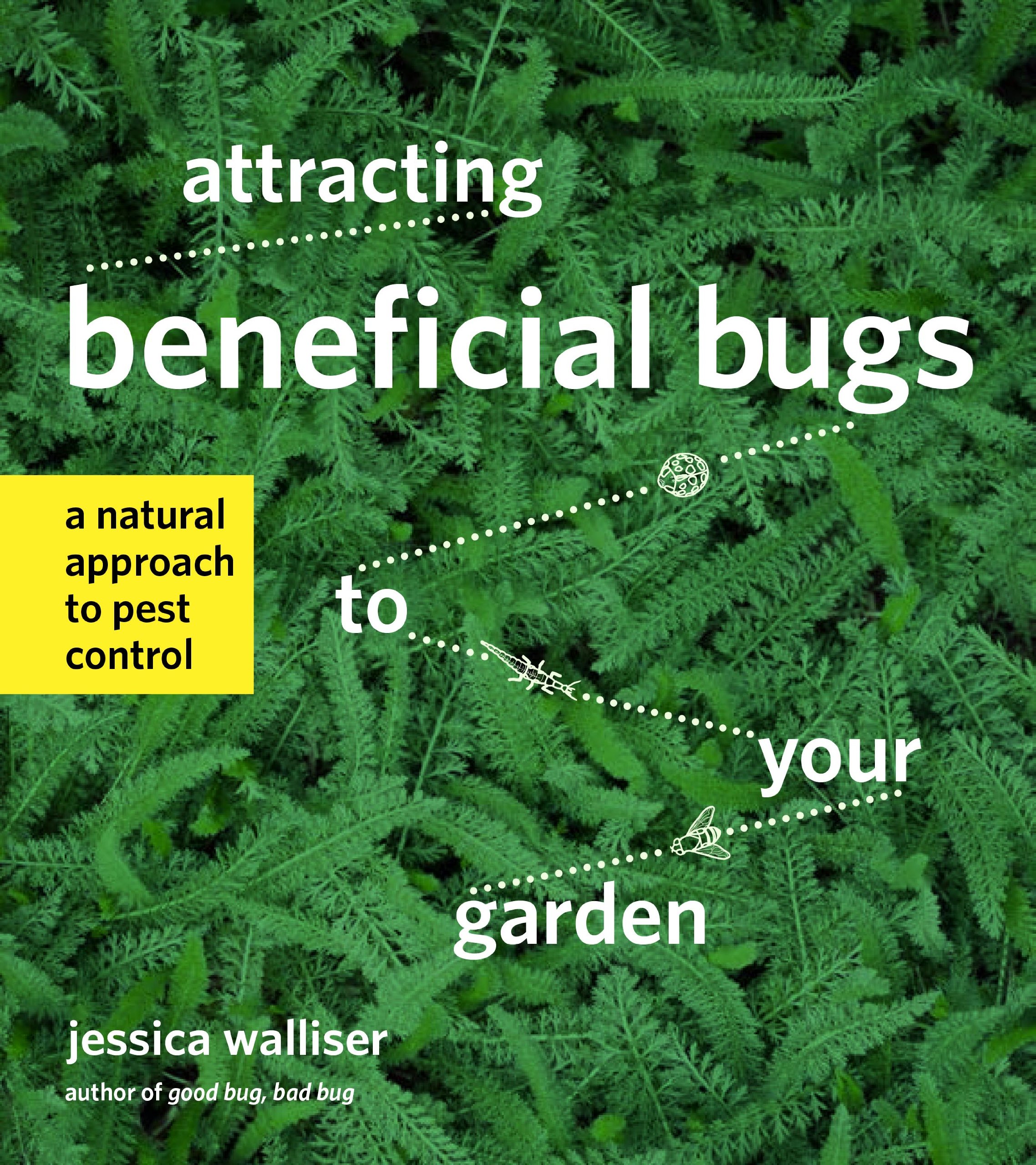
“Jessica Walliser lets readers in on the secrets to a garden that buzzes with activity. Her profiles, on the insects that fight pests and the best plants for attracting them, offer clear, practical tips.” —Martha Stewart Living. A healthy population of beneficial insects can eliminate the need for dangerous pesticides. Say goodbye to common pests like spider mites, aphids, and leafhoppers just by planting a beautiful garden full of the right flowers and herbs! At first it might seem counter intuitive to want bugs in your landscape, but insects are good for your garden—especially the helpful ones that eat the pests feeding on your favorite plants.  Say goodbye to common pests like spider mites, aphids, and leafhoppers just by planting a beautiful garden full of the right flowers and herbs! In Attracting Beneficial Bugs, organic gardening expert Jessica Walliser provides an accessible guide to selecting, placing, and caring for plants that will invite beneficial insects into your garden to do the dirty work of pest control for you. You’ll learn which plants lure in pest-eating predators and how to design a beautiful garden that provides for these beneficial bugs throughout the year. (from Amazon.com)

Nothing tastes better than herbs harvested fresh from the garden! Grow Your Own Herbs shares everything you need to know to grow the forty most important culinary herbs. You’ll learn basic gardening information, including details on soil, watering, and potting. Profiles of 40 herbs—including popular varieties like basil, bay laurel, lemon verbena, tarragon, savory, thyme, and more—feature tasting notes, cultivation information, and harvesting tips. Additional information includes instructions for preserving and storing, along with techniques for making delicious pastes, syrups, vinegar, and butters. If you are new to gardening, have a limited space, or are looking to add fresh herbs to their daily meals, Grow Your Own Herbs by Susan Belsinger is a must-have. (from Amazon.com)

Companion planting has a long history of use by gardeners, but the explanation of why it works has been filled with folklore and conjecture. Plant Partners by Jessica Walliser delivers a research-based rationale for this ever-popular growing technique, offering dozens of ways you can use scientifically tested plant partnerships to benefit your whole garden. Through an enhanced understanding of how plants interact with and influence each other, this guide suggests specific plant combinations that improve soil health and weed control, decrease pest damage, and increase biodiversity, resulting in real and measurable impacts in the garden. Intentionally growing certain plants together to benefit the whole garden now has science to explain its success. Jessica Walliser’s new vision of an old tradition is built around a modern understanding of the marvelous web of connections happening in the garden and how to use them to create real and measurable results. Discover dozens of well-studied partnerships that offer fresh strategies to:

  • - Break up heavy soils
  • - Combat weeds and disease
  • - Lure pests away
  • - Attract specific beneficial insects
  • - Improve pollination

Raised bed gardening is the fastest-growing garden strategy today, and Raised Bed Revolution by Tara Nolan is the definitive guidebook to mastering this consistently proven and effective gardening method. Raised Bed Revolution provides you with information on size requirements for constructing raised beds, height suggestions, types of materials you can use, and creative tips for fitting the maximum garden capacity into small spaces—including vertical gardening. Enhanced with gorgeous photography, this book covers subjects such as growing-medium options, rooftop gardening, cost-effective gardening solutions, planting tips, watering strategies (automatic water drip systems and hand watering), and more. The process of creating and building raised beds is a cinch, too, thanks to the extensive gallery of design ideas and step-by-step projects. This gardening strategy is taking serious root. Why? Several reasons:

  • Raised beds allow gardeners to practice space efficiency as well as accessibility (the beds can be customized to be any height).
  • Raised beds permit gardeners to use their own soil, and they can be designed with wheels for easy portability if partial sunlight is a problem.
  • Water conservation is easier for gardeners who use raised beds.
  • Pest control is assisted because most garden pests can’t make the leap up into the raised bed. For yards that struggle with drainage, raised bed gardening offers a no-brainer solution. Raised beds simply create a more interesting yard!

Find out more about why everyone is joining the raised bed revolution, roll up your sleeves and join in! (from Amazon.com)

Wednesday, April 21, 2021

In Celebration of Earth Day and National Arbor Day


Simon Winchester, the author of The Professor and the Madman, The Map That Changed the World, and The Perfectionists, explores the notion of property—bought, earned, or received; in Europe, Africa, North America, or the South Pacific—through human history, how it has shaped us and what it will mean for our future. Land—whether meadow or mountainside, desert or peat bog, parkland or pasture, suburb or city—is central to our existence. It quite literally underlies and underpins everything. Employing the keen intellect, insatiable curiosity, and narrative verve that are the foundations of his previous bestselling works, Simon Winchester examines what we human beings are doing—and have done—with the billions of acres that together make up the solid surface of our planet. Land: How the Hunger for Ownership Shaped the Modern World examines in depth how we acquire land, how we steward it, how and why we fight over it, and finally, how we can, and on occasion do, come to share it. Ultimately, Winchester confronts the essential question: who actually owns the world’s land—and why does it matter? (from Amazon.com)

In this impressive anthology, Natalie Baszile brings together essays, poems, photographs, quotes, conversations, and first-person stories to examine black people’s connection to the American land from Emancipation to today. In the 1920s, there were over one million black farmers; today there are just 45,000. Baszile explores this crisis, through the farmers’ personal experiences. In their own words, middle aged and elderly black farmers explain why they continue to farm despite systemic discrimination and land loss. The "Returning Generation"—young farmers, who are building upon the legacy of their ancestors, talk about the challenges they face as they seek to redress issues of food justice, food sovereignty, and reparations. These farmers are joined by other influential voices, including noted historians Analena Hope Hassberg and Pete Daniel, and award-winning author Clyde W. Ford, who considers the arrival of Africans to American shores; and James Beard Award-winning writers and Michael Twitty, reflects on black culinary tradition and its African roots. Poetry and inspirational quotes are woven into these diverse narratives, adding richness and texture, as well as stunning four-color photographs from photographers Alison Gootee and Malcom Williams, and Baszile’s personal collection. As Baszile reveals, black farming informs crucial aspects of American culture—the family, the way our national identity is bound up with the land, the pull of memory, the healing power of food, and race relations. She reminds us that the land, well-earned and fiercely protected, transcends history and signifies a home that can be tended, tilled, and passed to succeeding generations with pride. We Are Each Other’s Harvest elevates the voices and stories of black farmers and people of color, celebrating their perseverance and resilience, while spotlighting the challenges they continue to face. Luminous and eye-opening, this eclectic collection helps people and communities of color today reimagine what it means to be dedicated to the soil. (from Amazon.com)

Darwin's Most wonderful Plants: Darwin's Botany Today is by Ken Thompson. Most of us think of Darwin at work on The HMS Beagle, taking inspiration for his theory of evolution from his travels in the Galapagos. But Darwin published his Origin of Species nearly thirty years after his voyages and most of his labours in that time were focused on experimenting with and observing plants at his house in Kent. He was particularly interested in carnivorous and climbing plants, and in pollination and the evolution of flowers. Ken Thompson sees Darwin as a brilliant and revolutionary botanist, whose observations and theories were far ahead of his time - and are often only now being confirmed and extended by high-tech modern research. Like Darwin, he is fascinated and amazed by the powers of plants - particularly their Triffid-like aspects of movement, hunting and 'plant intelligence'. This is a much needed book that re-establishes Darwin as a pioneering botanist, whose close observations of plants were crucial to his theories of evolution. (from Amazon.com)

Acadia Tucker’s long love affair with perennial foods has produced this easy-to-understand guide to growing and harvesting them. A regenerative farmer who is deeply concerned about global warming, Tucker believes there may be no better time to plant these hardy crops. Perennials can weather climate extremes, promote healthy soil, mitigate drought conditions, and thrive without chemical fertilizers and pesticides. Many can be harvested year round. They taste good, pack lots of nutrients, and require little tending. In short, the world is a better place with more perennials in it and this book intends to get us there. Tucker inspires action by first laying the groundwork for tending an organic, regenerative garden. She highlights the 10 steps she recommends gardeners take to help perennial foods thrive. But most of the book is dedicated to profiles of popular perennial herbs, fruit, and vegetables, with explicit instructions on how to plant, grow, and harvest them. Tucker also offers suggestions on how to store and preserve perennials. Growing Perennial Foods is illustrated with dozens of pen & ink drawings and ends with a short chapter on frequently asked questions. And since this is a field guide, each profile gives readers enough space to write in any additional notes. While designed for gardening novices, this book is also for experienced gardeners who want to grow more resilient crops, and could use a little guidance. (from Amazon.com)


Wednesday, February 3, 2021

New Adult Non-Fiction


The How Not to Diet Cookbook is by Michael Greger, M.D., FACLM and the recipes come from Robin Robertson. This book features more than one hundred plant-based recipes meant to help with healthy, permanent weight loss. Dr. Greger’s introductory chapter explains what he means by the title and which foods are best for his approach to weight loss and healthy eating. He also includes his “Daily Dozen” list to help you make sure you get the nutrients and exercise necessary for optimum health. Things like beans, whole grains, nuts and seeds, greens, cruciferous veggies, hydration, and exercise comprise most of the list. There is a helpful chart you can photocopy so that you can remember how many servings of each you need per day. There is also a chart of “21Tweaks” that will help you hack your weight loss by reminding you what to do at each meal, every day, and every night. Flipping through the book, I have found that there may be ingredients that would be difficult to find in our area, but there are plenty of simple, delicious-looking recipes to choose from, so you are sure to find something to suit your taste. 


It’s almost the time of year to start that garden and we have the perfect book for you: Plant Partners: Science-Based Companion Planting Strategies for the Vegetable Garden by Jessica Walliser. Veteran gardeners and scientists know that intentionally growing certain plants together can benefit the whole garden. Jessica Walliser teaches you about the modern understanding of the web of connections happening in your garden and how to use them to create the results you want. These plant partnerships will offer strategies for breaking up heavy soils, combating weeds and disease, keeping pests away, attracting beneficial insects and improving pollination. For instance, did you know that chamomile discourages cabbageworm butterflies from laying their eggs? Or, if your potato patch is overrun with weeds, a cover crop of rapeseed (canola) may help you out? If you are a novice gardener, or if you just want to learn more about plants, then this is a very informative and interesting read. Who knows, you may improve your green thumb. 


The latest cookbook from infamous chef Gordon Ramsay is called Quick and Delicious. There are no difficult recipes or unusual ingredients here. Our favorite foul-mouth chef has gathered together one hundred recipes that can be cooked in thirty minutes or less. Ramsay shares the tips he has learned over the years to cut down on cooking times, but he never skimps on flavor. The introduction gives the home cook advice about faster, better cooking as well as an equipment list and an ingredient list that will help you punch up the flavor. With recipes like Moroccan Chicken and Couscous, Lamb Sirloin Roast with Creamed Cannellini Beans, and Dark Chocolate and Coffee Mousse, you can’t go wrong with giving a few of these a try. 


Author/photographer Brandon Stanton created Humans of New York in 2010. “What began as a photographic census of life in New York City soon evolved into a storytelling phenomenon.” Millions of people all over the world began following HONY on a daily basis. In this book, Humans, Stanton broadens his lens to include people from across the world. He traveled to more than forty countries and conducted interviews across continents, borders, and language barriers. These faces and locations may vary from page to page, but the stories that are told are shared by us all. These shared experiences range from the joyous to the sorrowful, the spectacular to the mundane, but they are all told with a candor and intimacy that makes them universal. 


Celebrated pastry chef Kelly Fields (with Kate Heddings) brings us The Good Book of Southern Baking. The subtitle—A Revival of Biscuits, Cakes, and Cornbread—lets us know right off that we are in for a treat. Fields begins her cookbook with a brief overview of the ingredients, techniques, and equipment that she thinks are most important for successful baking. She also says that, for the most part, you can use whatever suits you, but it is suggested you read the introduction so you can make the best choices for your baked goods. Fields has filled her book with all sorts of goodies: quick breads, muffins, biscuits, puddings, custards, cookies, bars, pies, cakes, and cobblers. This book is certainly chocked full of enough recipes to satisfy any sweet tooth or bread lover. Why not try the Praline Brownies, Bananas Foster Bread Pudding, or the Sweet Potato and Toasted Honey Marshmallow Pie?  

Wednesday, June 29, 2016

All About Animals

     This week's selection includes three very different non-fiction books. One is a memoir of a young woman who seeks to train the vicious goshawk as a way to cope with her father's death and to pay tribute to him at the same time. The second book is for those who would like to know how to quell your dogs behavior problems. The third book--while technically not about an animal--is a gardening book for those who would like to attract bees and other pollinators to their gardens.

     H is for Hawk is by Helen Macdonald. When her father died suddenly on a London street, Helen was inconsolable. In her grief, she decided to train one of the most aggressive members of the falcon family, the goshawk. As an experienced falconer, Helen knew their fierce and feral nature and was determined to adopt and train Mabel as a means to coping with her grief. She turned to author T.H. White's book The Goshawk for advice and inspiration. This achingly beautiful account of bereavement and the magnetic pull of such an extraordinary creature, H is for Hawk also offers a parallel examination of a legendary writer's eccentric falconry.


     The Dog Behavior Problem Solver by Teoti Anderson, CPDT-KA, KPA-CTP, offer step-by-step positive training techniques to help dog owners correct more than twenty problem behaviors. Dog owners will get professional advice to help you understand your dog and why he behaves the way he does. You'll learn techniques for positive, reward-based methods, like clicker training, to teach foundation behaviors as you build the basic bond upon which all dog training is based. The author offers detailed step-by-step solutions for specific problems like aggression, barking, begging, separation anxiety, and shyness. You will also find case studies based on real dogs and how positive training helped them to overcome their behavioral obstacles.


     Finally, we have The Bee-Friendly Garden by Kate Frey and Gretchen LeBuhn. The authors provide everything you will need to create a breathtakingly hued, vibrant, healthy garden that helps both the threatened honeybee and native bees alike. The size of you available space is not an issue. Whether you live in the city, suburbs, or country, just a few simple changes to your garden can help fight the effects of colony collapse disorder and the worldwide decline of the bee population that threatens the global food chain. This is a book for every gardener who wants to change the world by creating a welcoming environment for nature's pollinators.

Wednesday, April 20, 2016

Refresh Your Home for Spring!

     Spring is in the air and it's time to dust off those flower pots and clean out the cobwebs. We have a number of resources here at the library to help you with your spring cleaning and sprucing up. One resource that you may not have considered is our magazine collection. We have magazines available for check-out and digital magazines that can be viewed anywhere you have an internet connection.


     Thinking of starting a garden for the spring or want new ideas for your existing garden space? We have Mississippi Gardener, Southern Living, and Garden & Gun. Thinking of repainting and redecorating a room or two in your home? Why not check out House Beautiful, Traditional Home, or Country Living? Want to learn some new recipes to for that spring cocktail party. Why not check out Food Network Magazine, Rachael Ray Everyday, or Good Housekeeping?


     While the library offers a wide array of home decorating and improvement books, sometimes you want the latest styles and ideas to help you refresh your home. Magazines are a great way to do that. If you don't feel like coming into the library to check one of these out, then why not check out our online magazines? You can find them by following this link:
https://www.rbdigital.com/warrenms/service/zinio/landing?


Wednesday, August 26, 2015

Want to Get a Head Start on Planning Next Year's Garden?

     This is the South, and I know a lot of people who have gardens. We grow a great many things down here and whether it's vegetables or flowers, herbs or trees and shrubs, we all want to know how to choose the right plants, how to check soil conditions, and, increasingly, how to do all of this without a bunch of chemicals. Well, the library has two new books that can help you with that particular conundrum.
     The first is Southern Gardening: An Environmentally Sensitive Approach by Florida Master Gardener Marie Harrison. The author gives you all her tips and tricks for creating a verdant landscape that any gardener would be proud to call their own. Harrison's comprehensive guide focuses on environmentally conscious yards by suggesting use of ground-cover as well as easy-care, adaptable trees, shrubs, perennials and annuals. She tells you how to deal with exotic and invasive plants that threaten natural areas and native plants. She offers minimally damaging ways to deal with insect pests. Plus, she includes a month-by-month guide for planning your earth-friendly garden. (On a side note; I would like to thank the Green Hills Garden Club, Hester Flowers Garden Club, Openwood Garden Club, and the Morning Gardeners Garden Club for presenting this wonderful resource to the library!)
     The second title for environmentally friendly gardening is Roses Without Chemicals by Peter E. Kukielski. This book includes one hundred fifty disease-free varieties of roses that the author rates on its disease resistance, flowering, and fragrance.
Since roses have a reputation for being finicky plants that require chemicals and fertilizers to remain healthy, this book offers a refreshing look at recent breeding efforts that have produced disease resistant varieties that perform wonderfully in all types of conditions. Kukielski lets the reader know which varieties perform best in each region and gives tips for simple cultivation techniques that are sure to result in beautiful, easy-to-care-for roses that will fill your garden. Also included is a helpful resource guide and a list of other books to help you make the most of your garden.
     Gardeners will enjoy flipping through these books and may even be inspired to try something new in their next gardening project. Both contain full-color photographs that will make it easier to identify the plants they wish to use in the garden. These two books--along with many others found in the library--will help you make your garden lush and beautiful with minimal use of harmful and potentially dangerous chemicals.

Wednesday, March 11, 2015

Are You Ready for Spring?

     Spring is in the air! I know a lot of people who are still getting used to the time change from daylight savings and a few are still cleaning up from all the muck created with the recent batch of winter storms. But don't get discouraged! St. Patrick's day is coming up next week on March 17th and Spring begins on March 20th. The weather is supposed to clear up and I know that a great many of our patrons will begin preparing those garden plots. So, I'm including some of our most recent books on gardening to help you get started.
     First up is Deep South Month-by-Month Gardening: what to do each month to have a beautiful garden all year by Nellie Neal. As the long title suggests, the author gives you the tips and tricks needed to keep up your garden all year long. You will learn which plants grow best in our area and when you should plant, prune, or dig them up. She gives you an easy-to-follow format and includes step-by-step pictorial guides.

     One of the biggest challenges for gardeners is how to keep pests at bay without spraying all those harmful chemicals. Fear not, dear patrons, because we have Attracting Beneficial Bugs to Your Garden: A Natural Approach to Pest Control by Jessica Walliser. This book is all about beneficial bugs--who they are, how they work, what they eat, and how to attract them. The author profiles nineteen bugs which are helpful to gardeners, with descriptions, illustrations, and a list of their benefits, along with planting and zone details about thirty-nine plants which can be used to attract them.
     Not sure you want to plant and take care of a big garden? Don't really have the space to plant a garden? No problem! We have a couple of new books on gardening in small spaces. First, there is Grow Vegetables in Pots which gives you tips and tricks about how to plant tasty tomatoes and luscious herbs in small containers, so that you can enjoy the "fruits" of your labor without having to till up a garden plot. The author lists the plants that grow well in small spaces and which plants grow well together.
We also have the book All New Square Foot Gardening: the Revolutionary Way to Grow More in Less Space by Mel Bartholomew. This author covers how to build planter boxes, how to use vertical space to plant your crops, and how to extend your seasons to get the most out of your crops.

     All of these books (and more) are located in the library's non-fiction section between the call numbers 628 and 636. Feel free to come in and check some out or just flip through them to get some ideas. We have books for the novice gardener as well as the seasoned horticulturalist! Enjoy and Happy Planting!

Wednesday, April 9, 2014

Celebrate National Library Week, April 13-19 @ the Warren County-Vicksburg Public Library!

National Library Week 2014 will be packed with exciting programs at the Warren County-Vicksburg Public Library!  This year’s theme for the week, April 13-19 is “Lives Change @ Your Library”  This year’s 56th Anniversary of this nationwide observance, sponsored by the American Library Association, celebrates libraries, librarians and the activities and information available to all people. Throughout the week, library staff and guest presenters will host programs for the community.
     National Library Week is a great time to “meet” your friends and family at the library.  Show your support of Mississippi’s Libraries, and your commitment to your community, by visiting us during this special week.  Here is a list of programs:

—Learn how to “Garden With Herbs” on Tuesday, April 15 at 12:00 PM in the library auditorium. Warren         County Master Master Gardener Joelyn James will teach participants how to grow herbs.  The event is a Brown Bag Lunch—attendees are encouraged to bring their lunch and drinks and dessert will be provided by the library.  .—Now that you’ve learned how to grow herbs, attend our “Cooking with Herbs” program on Wednesday, April 16, 2014  at 12:00 PM,  hosted by Chef Chris Brinkley, of Anchuca Historic Mansion and Inn.  Chef Chris will create his famous fresh herb marinade and then teach attendees how to make a bruschetta appetizer  using the marinade.    The event is a Brown Bag Lunch—attendees are encouraged to bring their lunch and drinks and dessert will be provided by the library.
 —On Thursday, April 17 at 4:00 PM,   Blues harmonica player Bobby Rush will present a “Senior Ciizens Play the Blues” where he will teach Senior Citizens how to play the harmonica.  There is a limit of 30 participants and registration forms are available at the library and the Vicksburg Senior Center.  Registration will be on a first come-first served basis and completed forms must be turned in to the library.  Participants will receive their own harmonica and a great lesson from a famous musician!
—Friday, April 17 9:00-11:00 AM, we will celebrate our loyal supporters with “Customer Appreciation Day!’  Join us for coffee and cookies and some great conversations about books and movies.
     We would like to especially thank the members of the Board of Supervisors and our Mississippi Legislators during this week. Warren County provides over 80% of the money needed to run our library and we are thankful for their support.


Wednesday, July 3, 2013

Celebrate Summer with Gardening

Crops in Pots:  How to Plan, Plant and Grow Vegetables, Fuits and Herbs in Easy-Care Containers by Bob Purnell is a great book for the aspiring gardener!  It is perfect for the home gardener who wants to get his/her feet into growing fruits and vegetables for snacks or meal time.  The book begins with a great section on how to grow plants from seed
and how to take care of them, including figuring out what to plant and how to fertilize them, and even a section on pests and diseases.  The rest of the book is divided into sections as to the type of food you want to grow--starters, main courses, and desserts.  Each type of plant shown has a picture of the plant, a detailed method on how to grow it and a recipe using the items you've grown.  One of my favorites is the "Select Salad" on page 68.  It's a main course, and combines an assortment of edible leaves, blooms and other unusual salad ingredients in a large growing pot.  This is a very accessible and easy-to-read book, perfect for beginning and seasoned gardeners.  The 50 planter projects contained in the book will yield delicious rewards, even if your gardening space is minimal!


Wednesday, August 8, 2012

In Love with Lavendar


0
First let me say I am not a gardener. In fact, when I first moved into my house and was attempting to have a nice yard, a friend gave me a sign—“I tried but it died.” Truer words were never spoken. So, of course, since I lack a green thumb the two flowers I would most like to grow are peonies and lavender. I understand we don’t live in the correct temperate zone to grow either of these but that doesn’t stop me from longing for them. Recently I ran across a new book that has re-fired my desire for one of these.


The Lavender Lover’s Handbook by Sarah Berringer Bader offers the 100 most beautiful and fragrant varieties for growing, crafting, and cooking. With its intoxicating scent, wands of gorgeous purple flowers, lavender is one of the world’s most popular herbs. Lavender expert Sarah Bader introduces readers to 100 stunning varieties—from the continuous blooms of deep purple ‘Buena Vista’ to the incredible fragrance of ‘Grosso,’ the lavender often used in making perfume.


This is an essential resource for finding the best varieties with a complete checklist of the color, fragrance, size, and foliage of each plant-(And in the introduction it does offer not one but five different species of lavender that can be grown in hot, humid summers).


Whether you want to create a fabulous container garden, a dramatic border, or an exquisite herb garden, this rich primer gives easy, proven tips for growing, harvesting, drying, cooking, and crafting with this wonderful herb.


So armed with this knowledge I am going to try my hand at lavender. Check with me in a while to see how I’m doing.

Wednesday, November 30, 2011

The Garden to Kitchen Expert

The library just received an interesting book for cooks and gardeners alike. The Garden to Kitchen Expert written by Judith Wills and Dr. D. G. Hessayon contains over 680 recipes for the fruit and vegetables that you grow at home. The book contains classic recipes, methods for everyday cooking and new ideas for making the most of an "abundance" of one particular crop. There is also a great section on how to serve your produce fresh, without cooking and also how to store, preserve and pickle the things you grow. Each fruit and vegetable is presented, with full color pictures, followed by sections on storing, no-cook recipes, basic cooking and then fancy recipes. The book contains a wonderful recipe and produce index and covers almost every fruit and vegetable imaginable. Good news---even if you don't grow your own fruit or vegetables, you can still use the recipes in this book to prepare the ones you buy in the store!